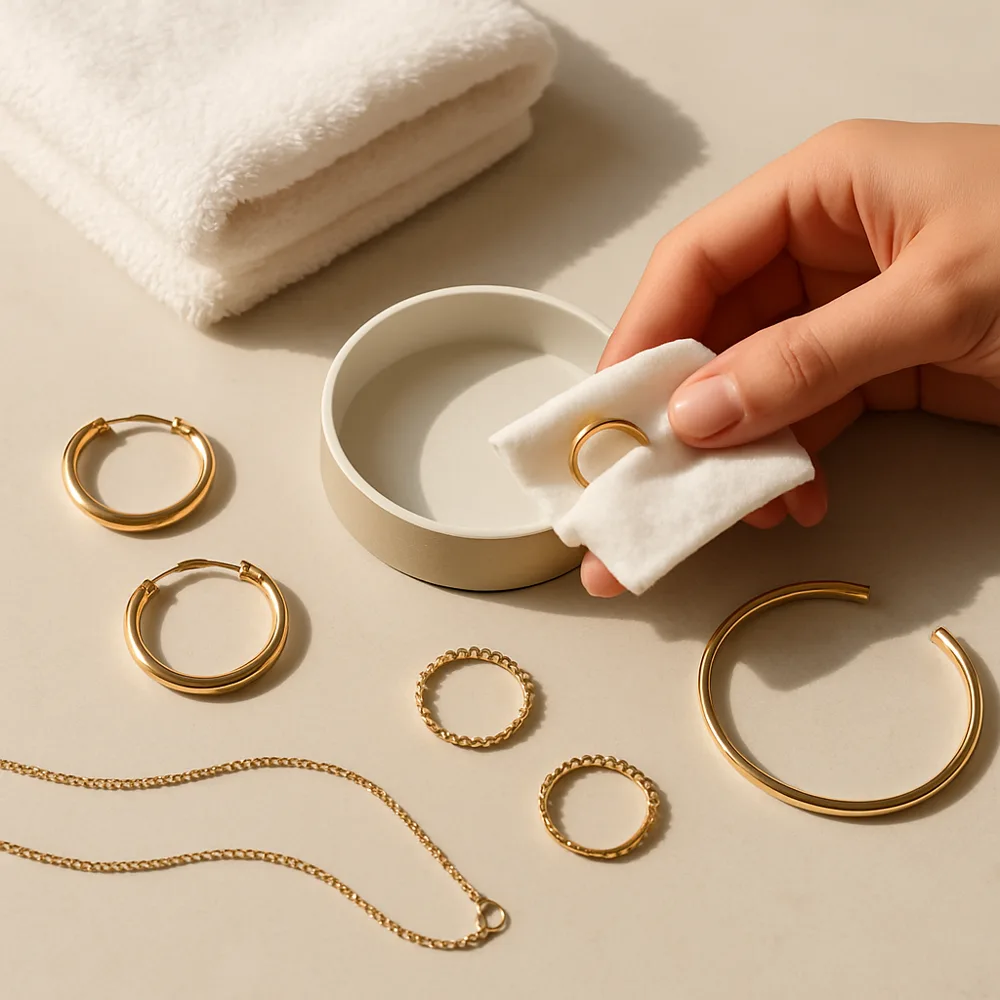
A clasp should close smoothly and stay shut during normal movement. Before wearing a necklace or bracelet, test it over a soft surface: open and close it a few times, then give the joined ends a gentle tug. The mechanism should feel consistent, with no obvious looseness, sharp edges, or parts that catch against the chain.
Common clasp styles work differently, and none is automatically perfect for every person or design. A small closure may be difficult to handle if you have limited dexterity, while a larger one may feel easier to fasten. Check how the clasp is attached to the chain as well; a reliable closure cannot help if its connecting ring is bent or pulling apart.
Remove jewelry before sleep, exercise, or tasks where a clasp could snag. If a closure becomes stiff or visibly damaged, stop wearing the piece until it can be checked or repaired. Do not bend a delicate part forcefully in an attempt to fix it. Regular, gentle inspection is a useful habit for both budget finds and treasured favorites.